
Sacramento and the Central Valley regularly see summer days above 100°F, and an uninsulated steel container in full sun can get much hotter inside. The good news: a few simple choices make a big difference.
1. Choose a light color
Light-colored containers – white, beige or light gray – reflect far more sunlight than dark blue or brown units. If you are buying a one-trip container, choose a light color; a used unit can be repainted with a reflective coating.
2. Use shade and orientation
Place the container where trees or buildings shade it in the afternoon, or add a simple shade structure or roof over the top. An air gap between a shade roof and the container roof is one of the most effective cooling measures.
3. Add ventilation
Hot air rises and gets trapped. Passive vents high on opposite walls let it escape, and a solar-powered roof vent or wall fan helps even more. Ventilation also reduces condensation in winter, protecting stored goods from moisture.
4. Insulate
For offices, workshops and anything temperature-sensitive, insulation is worth it. Closed-cell spray foam is the most popular option because it also acts as a vapor barrier; rigid foam panels and insulated wall linings work well too. A high cube container leaves more headroom after insulating. Many of our container offices arrive already insulated with air conditioning.
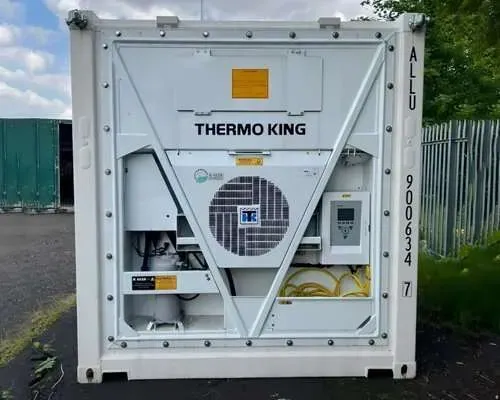
5. Use a refrigerated container for perishables
If you need a guaranteed temperature – produce, beverages, wine or pharmaceuticals – a refrigerated container is the answer. Reefers are insulated and climate-controlled, but most need three-phase power, so check your supply with an electrician first.
Quick checklist
- Light color or reflective roof coating
- Afternoon shade or a shade roof with an air gap
- High and low vents for airflow
- Insulation for occupied or sensitive uses
- A reefer for true cold storage
Need help choosing? Call our Sacramento team on (279) 272-6346.

